
The Spagyric Tradition
Rooted in ancient wisdom and refined through modern craftsmanship, spagyric processing helps transform plants into potent, bioavailable botanical extracts. Through an intricate cycle of separation and recombination, the plant’s essential components are purified and reunited, allowing its natural vitality and true essence to fully emerge.
The term “spagyric” derives from the Ancient Greek words spáō (to separate) and ageírō (to reunite), reflecting the process’s foundational principles. First documented by Paracelsus in the 1500s, this time-tested approach continues to guide the creation of carefully crafted herbal formulas today.
Methods for producing herbal tinctures have evolved significantly over time, often emphasizing standardization and isolated compounds. Spagyric processing, however, remains rooted in its traditional principles. This distinctive method works with the plant as a whole, carefully separating and purifying its components before recombining them, capturing not only its physical and chemical properties, but also what traditional herbalists describe as the plant’s “spirit” or energetic signature.
Whole-Plant Processing
When creating our spagyrically processed tinctures, plant material is soaked in a mixture of distilled water and cane alcohol, traditionally called a menstruum and now referred to as a solvent. Next, components such as essential plant oils, aromatic components, and mineral salts are extracted into the solvent. The resulting liquid is then filtered to remove any remaining solids and fibrous matter. This is typically where the process ends for conventional tinctures, which may then be standardized for specific compounds. Spagyric processing, however, proceeds with additional steps that further refine and reunite the plant’s essential components.
The spagyric process continues by working with the solid plant material remaining after the initial extraction. This leftover plant matter, called the herbal marc, is carefully burned until it becomes a fine white ash. During this process, the carbon is removed, leaving behind the plant’s natural minerals and trace elements, which are easily absorbed by the body. After the white ash and tincture are fully prepared, they are carefully reunited. Any non-soluble mineral salts that are remaining are filtered out, which leaves behind only the plant’s active compounds and purified minerals. The result is a unique solution that delivers the plant’s full potency and resonant signature in a form that the body can readily use.
The Stages of Spagyrics
Spagyric processing can be summarized through three intentional stages:
separation, purification, and reunification.
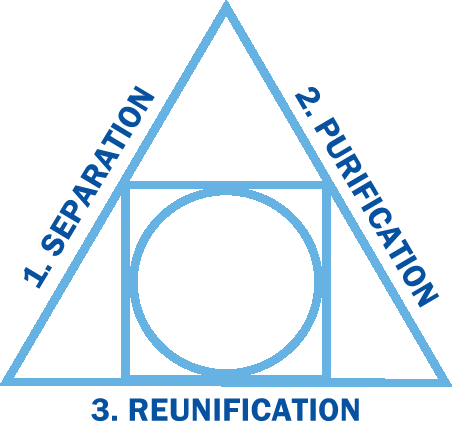
- Separation
First, the plant matter is coarsely ground, tinctured (soaked in distilled water and cane alcohol), and then pressed to separate the liquid from the solids. - Purification
The pressed plant solids that have separated are then burned to produce a white ash, known as the herbal marc. - Reunification
Finally, the mineral-rich ash is recombined with the liquid to create a readily usable tincture that’s not only pure and potent but also highly absorbable.
Why It Matters
What sets the spagyric method apart is its whole-plant philosophy, which honors both the plant’s physical and energetic properties. By refining and recombining the plant’s components, this process makes fuller use of the raw material while producing tinctures that are concentrated, sustainable, and intentionally crafted to support the body’s natural balance.
For over 25 years, Energetix has used the spagyric processing method to create out botanical tinctures. By adhering to all cGMP, NSF, and FDA guidelines and verifying each product with rigorous third-party testing, Energetix ensures that our practitioners receive a high-quality product they can trust for their patients.